
Securing building infrastructures in the defense sector
Objective and significance
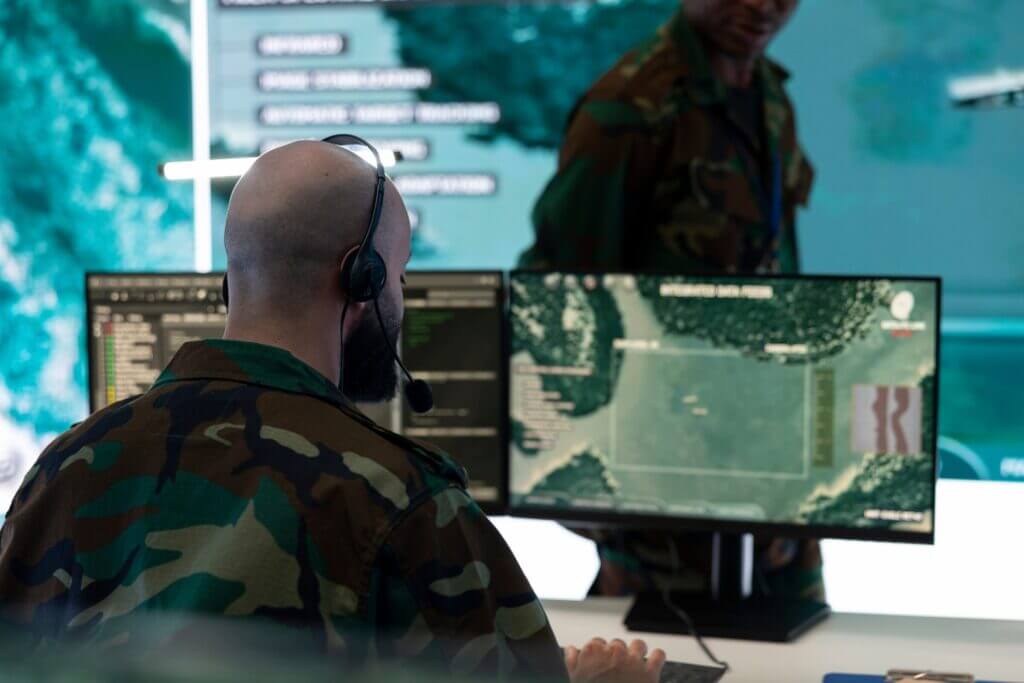
The aim of securing building infrastructures in the defense sector is to keep critical functions available at all times, even in the event of network disruptions, extreme environmental conditions or security-relevant events. Command and situation centers, data centers, communication nodes and technical operating rooms are particularly affected, as their failure would have a direct impact on operational capability and security.
Wöhrle meets this objective by combining its own UPS systems, battery storage systems and power distribution systems to create integrated supply concepts. Through project-related engineering, performance, self-sufficiency time and redundancy are precisely tailored to the respective building infrastructure so that mission-critical functions remain permanently protected.
Highly available energy supply as the basis
The central basis is a highly available power supply with redundant feeds, UPS-supported buffering and emergency power systems. This combination eliminates micro-interruptions, absorbs load peaks and ensures uninterrupted continued operation of mission-critical systems. In addition, modular and redundant architectures such as N+1 or A/B configurations are used to avoid single points of failure and enable maintenance work to be carried out during operation.
Wöhrle implements precisely these concepts by realizing modular UPS platforms with N+1, 2N or A/B design. Power and battery modules are designed redundantly and can be maintained or expanded during operation. In addition, Wöhrle integrates emergency power interfaces, intelligent load distribution and continuous monitoring to ensure an uninterrupted supply. Wöhrle's own control systems regulate the energy flow between the power supply unit, load and storage system, ensuring stable operation even during dynamic load changes.
Redundancy, modularity and operational reliability
Modular system concepts allow flexible expansion of the infrastructure and increase reliability at the same time. The consistent separation of supply routes, technical rooms and fire protection sections means that overall functionality is maintained even in the event of partial failures. These principles are essential to ensure the long-term availability of complex building infrastructures.
Wöhrle supports these principles with scalable energy architectures with separate load paths, prioritized consumers and automatic load shedding. The modular design allows power and battery capacity to be gradually expanded, while redundant supply paths and intelligent power distribution increase operational reliability in the long term.
IT, OT and physical security
IT and OT security play a decisive role alongside energy supply. Segmented networks, hardened server and technology rooms and continuous monitoring ensure that energy, communication and automation systems can be operated in a controlled manner even in the event of disruptions. Physical protective measures such as access controls, video surveillance, perimeter security and protected technical rooms also increase resistance to external influences.
Wöhrle supplements these safety measures on the energy side with EMC-optimized cabinet solutions, filter and surge protection as well as clean earthing and equipotential bonding concepts. The integrated monitoring of UPS, batteries and power distribution systems enables permanent status monitoring and early alarms so that faults can be quickly detected and rectified.
Integration of mobile and temporary extensions
As defence infrastructures are often supplemented by container solutions, temporary control centers or forward-mounted technical rooms, these must also be secured decentrally and seamlessly integrated into the existing building supply. Dedicated energy buffers and synchronized supply structures ensure that such extensions function reliably even if the power supply is unstable or off-grid.
Wöhrle meets this demand with compact, power-dense UPS systems and integrated battery storage systems that are specially designed for container and mobile applications. These solutions can be integrated synchronously into existing building infrastructures and guarantee a stable, highly available power supply even for off-grid operation or temporary use. In addition to individual components, turnkey control cabinet solutions are realized that are precisely designed for the load profile, environmental influences and bridging time, including the design of the battery capacity and project-specific switching schemes.